

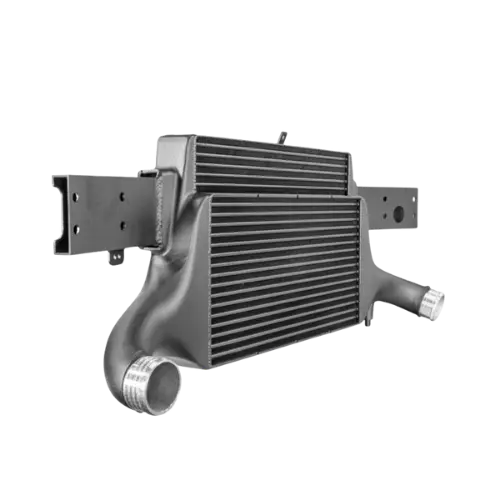
Choosing the right intercooler can feel like a deep dive into engineering, but it’s actually pretty straightforward once you break down the basics. Essentially, an intercooler’s job is to cool down the air entering your engine, which gives you more power and a smoother ride.
If you’re ready to upgrade, here are five simple things to keep in mind so you get the best bang for your buck.
1. Core Size: Bigger Isn’t Always Better
While it’s tempting to go for the biggest unit available, size needs to match your goals. * The Fit: First, make sure it actually fits behind your bumper.
- The Depth: Most daily drivers do great with a 3 to 3.5-inch thick core. It handles up to 700 horsepower without causing “boost lag” (that annoying delay when you hit the gas).
- High Power: If you’re building a dedicated track monster, you might step up to a 4 or 4.5-inch core.
2. Inlet and Outlet Size
These are the openings where the air enters and exits the intercooler.
- Compatibility: They need to line up with your existing piping.
- Airflow: Some high-performance models have larger inlets to swallow more compressed air, but for most street builds, keeping them standard makes installation much easier.
3. Core Design: Bar & Plate vs. Tube & Fin
Think of the core as the “radiator” part of the unit. You’ll usually see two types:
- Bar and Plate: This is the go-to for the aftermarket world. They are heavy-duty and very efficient at cooling, though they usually cost a bit more.
- Tube and Fin: Lighter and often cheaper, but they might not handle extreme heat as well as the bar and plate style.
4. Fin Density
If you look closely at an intercooler, you’ll see tiny “fins” inside.
- Surface Area: More fins mean more surface area. The more surface area the air touches, the faster the heat escapes.
- The Balance: You want a high density of fins for maximum cooling, but not so many that they block the air from passing through.
5. End Tank Material
The end tanks are the “caps” on the sides of the intercooler.
- Plastic (Stock): Most factory cars use plastic. These are okay for daily driving but can crack under high pressure.
- Aluminum (Upgrade): Aftermarket tanks are usually aluminum.
- Cast tanks are great because they are smooth inside, helping air flow faster.
- Billet tanks are carved from a solid block of metal—these are the “gold standard” for high-pressure, high-performance racing.
The Bottom Line Don’t just buy the most expensive one you see. Look at your horsepower goals and how much space you have under the hood. If you’re still feeling unsure, it’s always a good idea to chat with a pro who knows your specific car model.
Ready to give your build the cooling it deserves? [Browse our full range of high-performance intercoolers here.] Or still not sure which core size is right for your goals? Drop a comment below or reach out to our team for a personalized recommendation!
 Account
 Categories
 Shop
Shop Quotation
 Compare
 Sidebar
 Top
Top